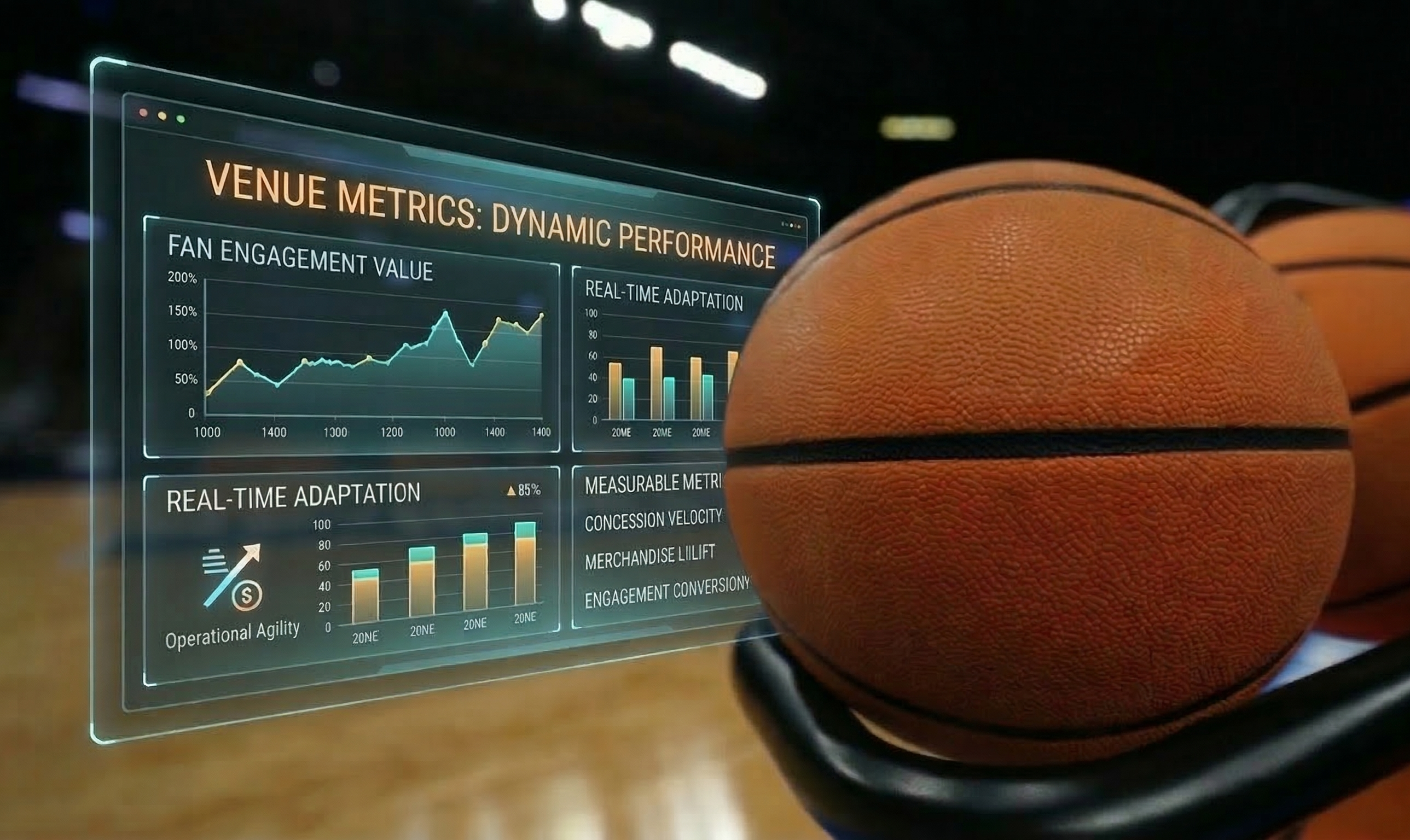
NCAA March Madness is the ultimate stress test for collegiate athletics—not just for the teams on the court, but for the venues that host them. The tournament’s rapid-fire schedule, neutral-site games, and constantly shifting matchups expose the critical flaws in traditional venue revenue models, revealing an urgent need for greater operational and financial agility.
The Static Sponsorship Trap in a Dynamic Tournament
The core challenge for a host venue in March Madness is its unpredictability. One day, you’re hosting four fanbases; the next day, two are gone. A traditional sponsorship model, built on season-long, static assets, is fundamentally misaligned with this environment. A pre-rendered video featuring a sponsor’s brand alongside a top-seeded team becomes instantly obsolete the moment an underdog pulls off an upset.
This reliance on static, pre-produced content creates significant financial risk and missed opportunities. When assets can't be updated in real time, venues are left with irrelevant creative, and sponsors receive diminished value. Industry leaders are now recognizing that the future of event monetization depends on visual agility—the ability to change themes, sponsors, and messaging on the fly. This shift moves digital inventory from a fixed, high-cost asset to a flexible, high-margin platform that can adapt to the tournament bracket in real time.
💡 Related Reading: Check out our blog on Unlock Revenue: The Guide to Interactive Sponsorship to dive deeper into this topic.
The Neutral-Site Engagement Challenge
Engaging a neutral-site crowd presents another significant hurdle. Generic "make some noise" prompts fall flat when the arena is a patchwork of competing loyalties. The tournament environment demands a more sophisticated approach to fan engagement, one that can unite a fragmented audience and create shared moments of excitement. Yet, most venues lack the technical infrastructure to deploy interactive, game-specific content at speed.
Moments like live polling ("Which player will hit the next three-pointer?") or sponsored trivia challenges that are relevant to the specific matchup are often impossible to execute with legacy systems. When venues fail to meet this standard, they not only deliver a subpar experience but also miss the chance to turn these moments into valuable audience insights that can inform future marketing and sponsorship strategies.
"Many sports fans are no longer interested in the game alone—they crave the kind of exclusive and shareable experiences that can be amplified by technology... Digital tools can also provide sponsors with more information about fans so that they can tailor the timing, content, and delivery of messaging for greater effectiveness."
– Deloitte, Digital Transformation and Future Changes in the Sports Industry
The High Cost of Constant Reconfiguration
From a purely operational standpoint, March Madness is a logistical marathon. A single venue may host conference championships and multiple rounds of the NCAA tournament in consecutive weeks, each requiring a complete visual rebranding. The operational costs associated with these changeovers—from updating digital signage to producing unique sponsor assets for each event—are substantial.
Best practices show a clear trend toward centralizing control of all in-venue screens through template-driven platforms. This approach transforms the costly, labor-intensive process of re-rendering static video files into a simple, instantaneous update. By turning operational burdens into revenue opportunities, agile venues can say "yes" to last-minute branding requests from the NCAA or its corporate partners, creating new income streams where previously there were only costs.
Conclusion: A New Playbook for Venue Monetization
March Madness serves as a powerful reminder that the old venue playbook is no longer sufficient. The future of sports business belongs to venues that embrace agility, interactivity, and operational efficiency. Success in this new era isn't about having the biggest screens; it's about having the smartest systems—platforms that can adapt to the unpredictable nature of live events and transform every moment into a measurable, monetizable experience. The venues that thrive will be those that move beyond selling static space and begin selling access to dynamic, real-time engagement.
Future-proof your venue's revenue model.
Learn how platforms like venue4D give your sales and operations teams the ultimate agility advantage, allowing you to trigger game-specific, sponsored interactive moments on the fly.
Book a Strategy Call