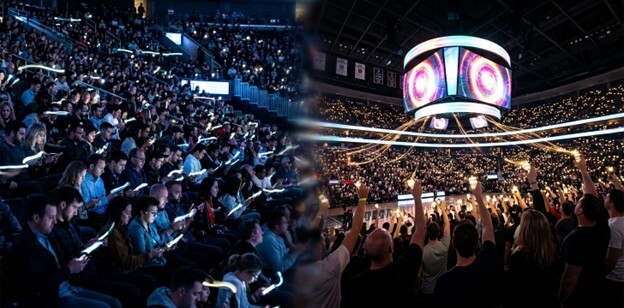
Each year, SXSW serves as a barometer for the future of technology and culture, offering a preview of the innovations that will soon become mainstream. For the sports industry, the event is less about specific gadgets and more about a critical underlying theme: the growing divide between the hyper-personalized, real-time digital world fans inhabit and the often static experiences offered within physical venues.
The Disconnect: Individual Screens vs. Collective Energy
A walk through any SXSW activation reveals a focus on seamless, interactive experiences that bridge the digital and physical realms. Yet, inside many sports arenas, a different story unfolds during breaks in play: thousands of fans with their heads down, individually scrolling through social feeds. This "second-screen" problem isn't just a challenge for attention; it's a fundamental fragmentation of the collective energy that makes live events special.
Industry leaders are recognizing that fighting the phone is a losing battle. The more effective strategy is to harness it. Best practices show a clear shift toward architectures that turn individual devices into collective inputs for a shared, high-impact moment. The goal is not to create thousands of separate mobile experiences but to use those devices as controllers for a singular, massive experience that resolves on the main video board for everyone to see together. This preserves the communal atmosphere while making the fan an active co-creator of the show.
💡 Related Reading: Check out our blog on NBA All-Star Weekend: The Ultimate R&D Lab for Future Fan Experiences to dive deeper into this topic.
The Speed Gap: Real-Time Culture vs. Pre-Rendered Production
The cultural currency of an event like SXSW is immediacy. Moments are captured, shared, and amplified in seconds. This reflects a broader consumer expectation for real-time responsiveness that many venue production workflows are ill-equipped to handle. Most venues still rely on pre-rendered video files, a rigid and slow process that prevents them from reacting to the unpredictable energy of a live game.
When a record-breaking play happens, fans have already posted about it on social media before the venue's official graphic even hits the screen. This gap makes the in-venue experience feel dated and disconnected. To close it, modern venues must move beyond legacy production models and adopt the real-time graphics engines that power today’s most advanced interactive entertainment.
"Creating a truly integrated ‘phygital’ experience is key to meeting these expectations, allowing fans to engage... across a multitude of channels and platforms."
– Forbes, The Future Of The Fan Experience Is Phygital
This architectural shift is the key to creating smarter, more responsive experiences. It enables graphics to be triggered by live game data, crowd noise, or fan polling, transforming the venue from a passive broadcast medium into a dynamic, interactive environment.
Conclusion: From Gaps to Gateways
SXSW doesn't just showcase new technology; it highlights new expectations. For the sports industry, the clear signal is that the digital-physical divide is no longer tenable. Fans expect the immediacy and interactivity of their digital lives to extend into the arena. Venues that successfully bridge this gap—by prioritizing collective, screen-first experiences and embracing real-time production—will not only capture fan attention but also unlock powerful new opportunities for engagement and monetization. The future of the fan experience is one where the energy of the crowd and the power of technology are one and the same.
Transform your fans into co-creators.
Learn how to harness the "second-screen" problem and turn thousands of smartphones into a singular, high-impact venue moment.
See the Technology in Action