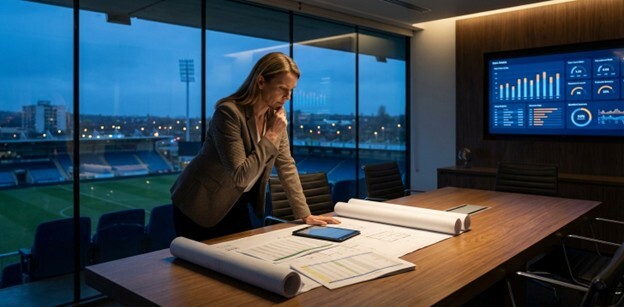
In the live event industry, a palpable tension exists between soaring fan expectations and tightening operational budgets. While attendance is strong, venue operators are grappling with a perfect storm of rising expenses that threaten profitability. The challenge is no longer simply about putting on a good show; it’s about managing a complex financial reality where every line item is under pressure.
The Visible and Invisible Cost Drivers
The most apparent budget pressures come from predictable sources: rising energy costs, higher wages for skilled labor, and increased spending on maintenance and security. However, the more significant and often overlooked drains on venue budgets are the hidden costs embedded in traditional production workflows and fragmented technology stacks.
For years, creating in-venue graphics has been a labor-intensive process. Industry analysis shows that producing static, pre-rendered video files for scoreboards and ribbon displays can consume 20-30% of a game-day operations budget. This workflow is inherently slow and expensive, requiring specialized designers and long rendering times for every minor update. When a sponsor requests a last-minute creative change or a theme night requires a new visual package, the costs compound, turning what should be a creative asset into a significant operational bottleneck.
💡 Related Reading: Check out our blog on From Pre-Rendered to Real-Time: The Future of Venue Tech to dive deeper into this topic.
This problem is magnified by disparate technology systems. Many venues operate with separate software for the main jumbotron, ribbon boards, and concourse displays, each requiring its own operator and content workflow. This fragmentation increases complexity, raises the risk of errors, and prevents the kind of agile production needed to maximize revenue.
Shifting from Overhead to Operational Efficiency
To combat these rising costs, industry leaders are moving away from brute-force spending and toward strategic investments in operational efficiency. The focus is shifting from simply managing assets to building intelligent systems that reduce friction and empower leaner teams. This new approach is built on a foundation of consolidation and agility.
"A business is only as strong as the efficiency of its processes. Complexity is the enemy of execution."
Best practices show that venues are unifying their in-bowl experience under a single, cohesive platform. By using integrated, real-time graphics engines, operators can control every screen from a central interface. This not only streamlines workflows but also allows for instant content updates. Instead of rebuilding assets from scratch, teams use configurable templates, enabling them to change sponsor logos, colors, and messaging in seconds. This visual agility turns a slow, expensive process into a dynamic and cost-effective operation.
This system-intelligent approach gives venues a crucial agility advantage, allowing them to do more with less. When production is no longer a bottleneck, staff can focus on creating high-value fan experiences and executing new sponsorship opportunities, turning a traditional cost center into an engine for growth.
Conclusion: The Path to Sustainable Operations
Navigating the current financial landscape requires more than just budget cuts; it demands a fundamental rethinking of how venues operate. The rising tide of costs is a challenge, but it also presents an opportunity to innovate. By embracing modern, efficient workflows and consolidating technology, venues can gain control over their expenses. The most resilient and profitable venues of the next decade will be those that learn how technology can control operating costs and build a sustainable model that delights fans without breaking the budget.
Ready to Elevate Your Venue Strategy?
Explore how leading venues are implementing these practices to drive engagement and revenue.
Learn More