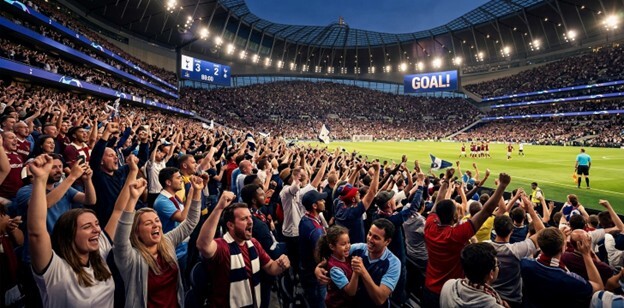
The marketing playbook for the digital age is built on a simple, powerful idea: personalization drives engagement. Companies like Netflix and Spotify have perfected the art of one-to-one customization, training consumers to expect experiences tailored to their individual tastes. Yet, when applied to the 50,000-person environment of a live sports arena, this same strategy often backfires, creating the Personalization Paradox—a phenomenon where the quest to engage each fan individually ends up fragmenting the collective energy that makes live events magical.
The Fallacy of One-to-One Marketing in Arenas
The temptation to personalize at a granular level is immense. The potential to capture first-party data and deliver targeted sponsor offers seems like the logical next step. However, this approach overlooks the fundamental psychology of a live audience. The core value of attending a game is the communal experience—the roar of the crowd and the feeling of being part of something larger than oneself.
When personalization is over-indexed, it creates "heads-down" moments. Thousands of fans, prompted to engage with unique content on their phones, become disengaged from the collective atmosphere. This fragmentation doesn't just hurt the "vibe"—it dilutes the impact of the operational agility that venues work so hard to maintain. A stadium full of people staring at separate screens is one where the primary asset—the crowd—is dormant.
💡 Related Reading: See how fragmented engagement can impact the bottom line in our look at How March Madness Exposes Gaps in Venue Revenue.
The Power of Collective Interaction
To overcome the paradox, venue leaders must pivot from one-to-one personalization to collective interaction. This means using technology to synchronize the crowd rather than divide it. Instead of sending a personalized coupon to a single phone, modern venues are using "Screen-First" strategies where individual mobile devices act as controllers for the massive LED displays.
When a fan votes in a live poll or participates in a stadium-wide game, their individual action is immediately reflected in the collective outcome shown on the jumbotron. This bridge between the personal device and the shared screen reinforces the communal experience. It transforms the smartphone from a tool of isolation into a tool of participation, turning 50,000 separate fans into a single, unified force.
Conclusion: Preserving the Roar
The future of fan engagement isn't about making every fan feel like they are at home on their couch; it’s about making them feel like they are part of a legendary moment that can only happen here. By prioritizing shared, real-time experiences over isolated customization, venues can solve the personalization paradox. The goal is to preserve the roar of the crowd, ensuring that the magic of the live event remains a powerful, shared adventure.
Don't let "personalization" kill the magic of game day.
The power of a stadium lies in the collective experience, not individual isolation. Learn how to use "Screen-First" technology to synchronize your crowd and create the massive, shared moments that keep fans coming back for more.
Explore the Unified Experience