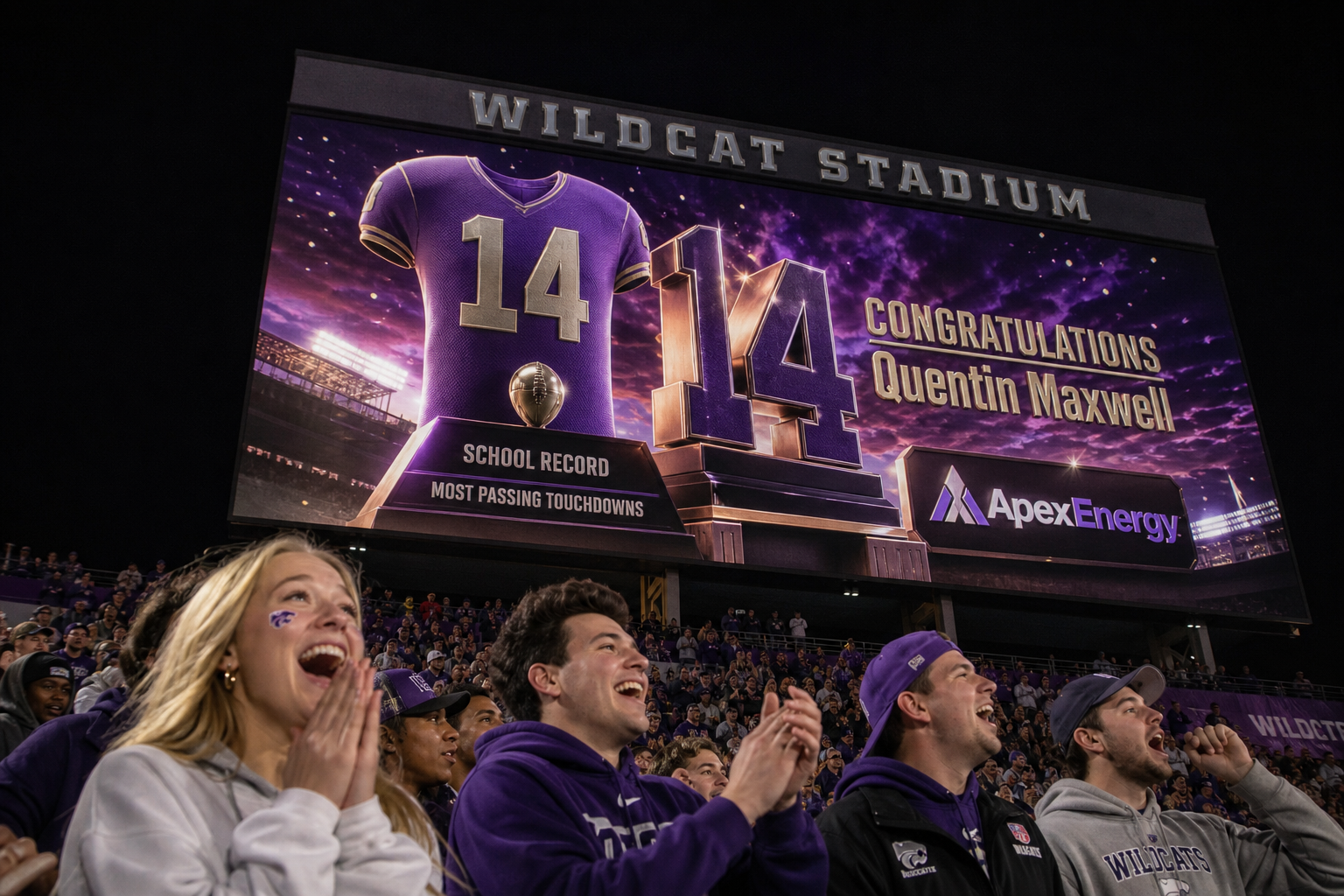
In a tight October college football rivalry, a sophomore wide receiver hauls in his tenth reception, breaking a single-game school record. The in-venue production team scrambles to create a graphic celebrating the moment, but it’s too late. The asset was never pre-built, and by the time a makeshift visual is ready, the game has moved on. This operational friction is a familiar reality in venues still reliant on traditional, pre-rendered video workflows.
The Limits of a Pre-Rendered World
For decades, videoboard content has been produced like a television commercial. Motion graphics designers create video files—typically .mov or .mp4 formats—days or even weeks before an event. These files are loaded into a playback system and run on a fixed schedule. While this process produces a polished result, it is fundamentally rigid. It cannot adapt to the unscripted, high-emotion moments that define a live game.
This “rendering bottleneck” creates significant operational and financial challenges. Last-minute sponsorship requests are denied, player-specific graphics become obsolete with a single injury, and production budgets are consumed by the high cost of creating disposable, single-use video assets. The result is a fan experience that often feels disconnected from the live action, broadcasting at an audience rather than interacting with them. The shift from pre-rendered to real-time technology is a direct response to these limitations.
The Architectural Shift to Real-Time Rendering
So, what are real-time graphics? Instead of playing back a video file, a real-time graphics engine generates the visuals live, frame by frame, much like a modern video game. This architectural shift from a playback model to a generative one is transforming what is possible on venue screens. Using powerful platforms like Unreal Engine, these systems can create cinematic-quality visuals that respond instantly to a wide range of live data inputs.
This approach gives operators the agility to change text, swap sponsor logos, and update player stats on the fly, without a lengthy rendering process. As a result, graphics can be directly tied to the action on the field or court. This fundamental change is reshaping how industry professionals think about live production and is central to how modern venues use game engines to power their shows.
“A lot of pre-rendered video clips end up getting played back through these traditional broadcast systems. There’s not a lot of flexibility to modify anything on the fly; you get locked in pretty early. But… we’re doing full 3D geometry of everything that’s animated… We can art-direct it and be able to change all the lighting and particles on the fly.”
The core benefit of this model is efficiency. By moving to a template-driven workflow, venues can drastically reduce their reliance on expensive, custom design work. A single “Player of the Game” template can be used across every sport, instantly re-skinned with team colors and sponsor branding. This allows leaner teams to produce a high-end show that remains fresh and responsive all season long.
💡 Related reading: Why Venues Are Switching to Real-Time Graphics — explore the operational and financial drivers behind this industry-wide technological evolution.
What This Means for NCAA Venues
For collegiate and mid-major venues, this technological shift unlocks two critical opportunities: smarter sponsorship and deeper fan engagement. Real-time graphics allow revenue officers to move beyond selling static ad placements and start selling dynamic, high-impact “moments.” For example, a local bank can sponsor a “First Down” graphic that triggers automatically every time the home team moves the chains. This creates a powerful brand association that a generic video loop cannot match, enhancing sponsorship ROI with every first down.
This technology is also the foundation for true interactivity. During a timeout, a venue can launch a “Predict the Next Play” poll where fans vote on their phones. The results can be displayed in a dynamic 3D chart on the main videoboard in seconds. These moments capture fan attention when it’s most available and focus it back on the shared, collective experience. It turns the videoboard from a passive screen into an active, participatory canvas, which is central to how in-venue digital games and fan polling are redefining engagement.
The move to real-time graphics is more than a technical upgrade; it is a strategic imperative for any venue looking to compete in the modern sports landscape. This practical technology allows athletic departments to deliver a broadcast-quality experience, create more valuable inventory for sponsors, and keep fans engaged from the opening kickoff to the final buzzer. The most successful venues will be those that evaluate their technology not just on how good it looks, but on how quickly it can react.
Ready to Elevate Your Venue Strategy?
See how venue4D™ helps leading venues turn live moments into measurable revenue.
Talk to venue4D